
Our History
Spending time in this historic villa places you in the midst of some important Italian history. We are still learning about this villa and the role it played in the community, but the Blue Lion shield high on villa wall marks it as once belonging to the important Ricasoli family who’s ancestor – Bettino Ricasoli – was the second prime minister of the Kingdom of Italy. But we are getting ahead of ourselves.

First historical signs
The first historical dating of the farmhouse goes back to the early Middle Ages when Il Molinaccio was a watchtower and served the nearby fortified castles Meleto, Brolio, Cacchiano and Vertine to warn them of any hostile movements in the Chianti Valley which in the Middle Ages was a land of great battles between the factions of Guelphs and Ghibellines.

Later, the farm was bought by the historic Ricasoli family who included it among its vast estate. They initially transformed it into an agricultural farm and subsequently, to take advantage of the beautiful stream that traverses the property, into a mill that, for many years, was very useful to local farmers. Consequently, the area has ever since been known to all as Il Molinaccio.
The main seat of the Ricasoli Estate is Castello di Brolio, which is still owned by the Ricasoli family today. It is still an active winery and hosts tours as well as wine tasting. Castello di Brolio is ion the other side of Gaiole, about 10 km or so from Il Molinaccio. So how does Il Molinaccio fit in with the Ricasoli family? Well, much closer to us is Castello di Meleto which also belonged to the Ricaoli family, it was more of a vacation home, if you will. The first reference to the structure that became Castello di Meleto was in the 11th century as a Benedictine monastery. The monks then were producing wine, which still continues to this day at Meleto. It came into the possession of the Ricasolis by the 13th century and was used as part of the defense of Florence against Siena. Il Molinaccio is purported to have started out as a watch tower for the castle. It’s not clear when Il Molinaccio was separated from Castello di Meleto, but it occurred sometime between 1946 and 1968.
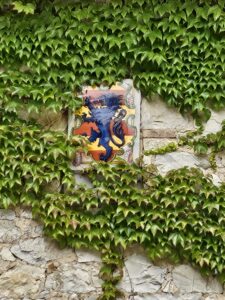
The Ricasoli Family
In 1809 Bettino Ricasoli was born in Florence and was orphaned at age 18. He was left with the family estate, which, by that time, was heavily in debt. He moved to the family seat, Castello di Brolio, which is in Gaiole in Chianti and then spent the next few years disencumbering the family’s estate and returning it to solvency as well as restoring the vineyards. He spent a lot of time traveling and studying winemaking methods as well as experimenting with wine varieties. The result of this experimentation was settling on a blend to produce the best wine at his estate. It is called the official recipe for Chianti wine, and although sometimes percentages are attributed to it, there’s no evidence of an exact recipe in his writings. Instead, it’s more of an ingredient list as he chose the base of Chianti wine to come from Sangiovese grapes supported by Canaiolo and Malvasia.
After his wife died in 1848 and the pressures of the Risorgimento were going stronger, he moved into the political arena. In 1847 he started a journal called La Patria and pushed for the unification of Italy. He took various government roles including Tuscan Minister of the Interior in 1859 and then became an Italian deputy in 1861 in the newly formed Kingdom of Italy. He was elected as Prime Minister in 1861 after Count Camillo Benso Cavour died only three months into his tenure. Ricasoli resigned 9 months later due to pressure from his rival, Urbano Rattazzi who succeeded him. He returned to the Prime Minister office in 1866, but again resigned after 10 months, and again, his rival Urbano Rattazzi succeeded him.

Late 90s
It was not until the late 1990s and early 2000s that the villa was carefully restored, fully respecting the historic structure of a rustic farmhouse with the typical characteristics of Tuscan traditions.
Fortunately the first person who made substantial renovations 25 years ago is still in the area and we will get more information on how it came into his possession. One of our other neighbors also has a history with the villa so will learn more from him as well.
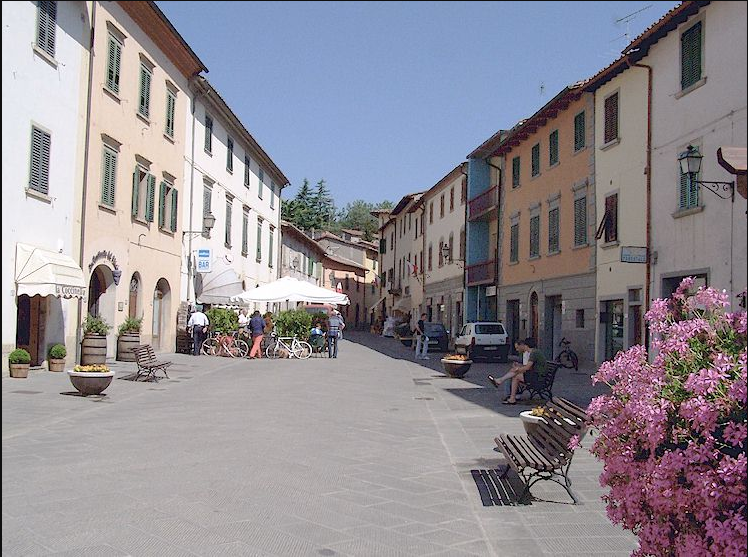
Gaiole in Chianti
Not only is our villa historic, but so is the nearby village of Gaiole in Chianti. The first definition of a Chianti area was described in 1716 as the Lega del Chianti and included the village of Gaiole, Radda, and Castellina. Although the initial league was created for military purposes, it later was used by Cosimo III de’ Medici, then the Grand Duke of Tuscany, in a decree that these communities along with Greve and an area near Spedaluzzo were the only recognized producers of Chianti wine. He used the league name to name the wine that came from the same area. The area that comprises the Chianti region has since grown and changed, but Chianti Classico can still only come from a much smaller area of the actual Chianti region, and we are in the heart of it. Chianti Classico is easily spotted by the black rooster on the label. Why a black rooster? I’m glad you asked!

Il Molinaccio Today
Over the years Il Molinaccio has become a splendid villa to spend the holidays. Today you can admire the beautiful brick vaulted ceilings on the ground floor, the terracotta floors upstairs and the ancient oven that was once used to bake bread and other local delicacies. The large fireplaces, rural decorations and authentic aura establish the welcoming and soothing atmosphere that is immediately felt upon entering the farmhouse.
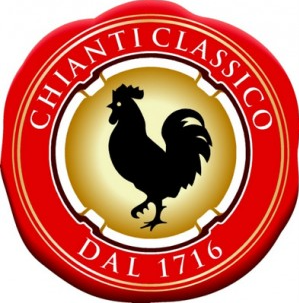
The Legend of the Black Rooster
For those who studied Italian history, Italy is a relatively young country only becoming unified into a single country in 1861. Before that it was made up of city-states anchored by major cities with surrounding villages under their control. Although Florence and Siena are only about an hour apart, they were bitter rivals for nearly 500 years. They fought a proxy war for the Guelphs and Ghibellines, they fought over trade routes, and they fought over culture. As with all conflicts though, it comes down to money, power, and control.
At one point in this conflict, Florence and Siena were competing for control over the Chianti region. To resolve the dispute, the two cities agreed on a unique challenge: one knight from each city would set out at the crowing of a rooster, and the point where they met would define the territorial border. The choice of rooster was crucial, as it determined the start time for each knight’s journey.
The Sienese chose a white rooster, treated it well and made sure it was fed so that it would crow as expected on the selected morning. The Florentines chose a black rooster, locked it in darkness, and did not feed it for three days. At midnight, the start of the designated day, the Florentines opened the door for their rooster. As you can imagine it was hungry and in a foul (fowl?) mood. It crowed immediately. So the Florentine knight mounted his horse in darkness and set out towards Siena. By the time the white rooster crowed several hours later and the Sienese knight began his journey, the Florentine knight had a significant headstart. In fact, the two knights met just 12 km from Siena near a small village called Fonterutoli deep into what had been Sienese territory.
As a result, Florence claimed most of the Chianti region and the black rooster became the symbol of the Lega di Chianti. In 1924 when the Chianti Classico consortium was formed to protect their wine, they needed a symbol – the gallo nero was the natural choice.